How to Get More Google Reviews for Your Dental Practice (Ethically and Consistently)
How UK dental practices build a steady flow of genuine Google reviews without crossing GDC or GDPR lines.
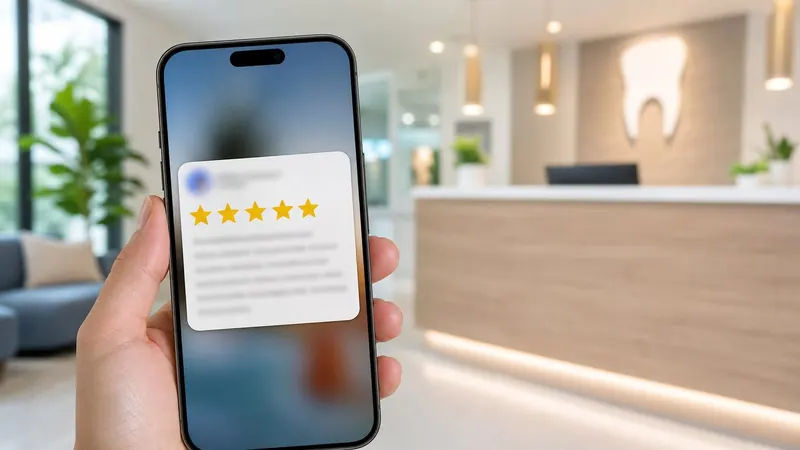
When someone searches "dentist near me", they don't read your website first. They look at the three practices in the map pack, compare star ratings and review counts, and shortlist from there. A practice with a 4.9 rating from 300 reviews will win against a 4.7 from 25 almost every time — regardless of clinical quality.
Short answer: ask every patient, at the right moment, with a one-tap link — and build it into your check-out process so it happens automatically rather than when someone remembers. Never incentivise reviews, never write them yourself, and never reply in a way that confirms someone is a patient.
Why reviews matter more for dentists than most businesses
- Trust is the whole decision. Choosing a dentist is choosing who puts instruments in your mouth. Prospective patients are looking for reassurance, and 200 strangers saying "gentle, explained everything, no pain" delivers it better than any website copy.
- Google ranks on reviews. Review count, average rating, recency and how many mention your services are all local ranking signals. More recent reviews mentioning "Invisalign" or "nervous patient" help you rank for exactly those searches.
- Private patients especially. For higher-value treatments — implants, aligners, cosmetic work — patients research more and reviews weigh more.
The rules you must respect
Dentistry is regulated, so a few things are different from a plumber asking for a review:
- Don't incentivise. Offering discounts, free whitening or prize draws for reviews breaches Google's policies and sits badly with GDC guidance on advertising. Ask, don't reward.
- Don't confirm patient status in replies. Replying "Thanks Sarah, glad your root canal went well!" discloses health information. Reply warmly but generically: "Thank you for the kind words — we're glad you had a good experience with the team."
- Don't cherry-pick. Asking only the patients you know were happy ("review gating") is against Google's rules. Ask everyone; your genuine rating will still be high.
- Do get consent for follow-up messages. A review request by SMS or email is a marketing contact under UK GDPR / PECR. Add a tick box at registration and you're covered.
What actually works in a practice
1. Ask at check-out, every time
The moment a patient walks back to reception after a good appointment is the peak of goodwill. A simple line from the receptionist — "If you've got thirty seconds, a Google review really helps other patients find us" — is all it takes. Make it a standard part of check-out, like booking the next appointment.
2. Send a one-tap link within the hour
Verbal asks get forgotten in the car park. An automated SMS an hour after the appointment — "Thanks for visiting [Practice] today. If you were happy with your care, a quick review helps us enormously: [link]" — converts far better. Use your direct Google review link, not "search for us".
3. Put a QR code in the waiting room and on appointment cards
A small sign at reception — "Happy with your visit? Scan to leave a review" — catches patients while they wait for a taxi or settle their bill.
4. Get the clinician to mention it
A review request lands differently from the dentist than from the front desk. "If you were happy today, a review means a lot to me personally" — said by the person who did the treatment — has a noticeably higher hit rate.
5. Reply to every review within a few days
Google rewards engagement, and prospective patients read your replies as closely as the reviews. Thank positive reviewers briefly and generically. For negative ones, stay calm, don't dispute clinical details publicly, and invite them to contact the practice manager directly.
6. Ask nervous patients specifically
Anxious patients who have a good experience write the most persuasive reviews — and "nervous patient" is one of the most-searched phrases in dentistry. If someone tells you they were dreading the visit and it was fine, that's the review you want.
Handling a bad review
Every practice gets them. The reply matters more than the review. Acknowledge, don't argue, don't confirm they were a patient, offer a direct route to resolve it: "We're sorry to hear this. We take all feedback seriously and would welcome the chance to discuss it — please contact our practice manager on [number]." Future patients see a professional practice, not a defensive one.
How many reviews do you need?
Enough to be clearly ahead of the other two practices in your local map pack, and a steady flow of new ones every week. Recency matters — 50 reviews from last year lose to 50 from the last three months. A practice seeing 40 patients a day that asks everyone should comfortably add 20–40 reviews a month.
Getting started
Look up your own practice in an incognito window. Count your reviews, note the date of the most recent, and compare with the two practices beside you in the map pack. That gap is your target.
At WebFlux AI we set up automated, compliant review requests as part of our Google Business Profile and local SEO work for dental practices, and our AI receptionist can send the request automatically after every appointment.
Ready to apply this to your business?
See how WebFlux AI works for dentists, or book a free 30-minute call — a live demo and honest advice, no hard sell.